
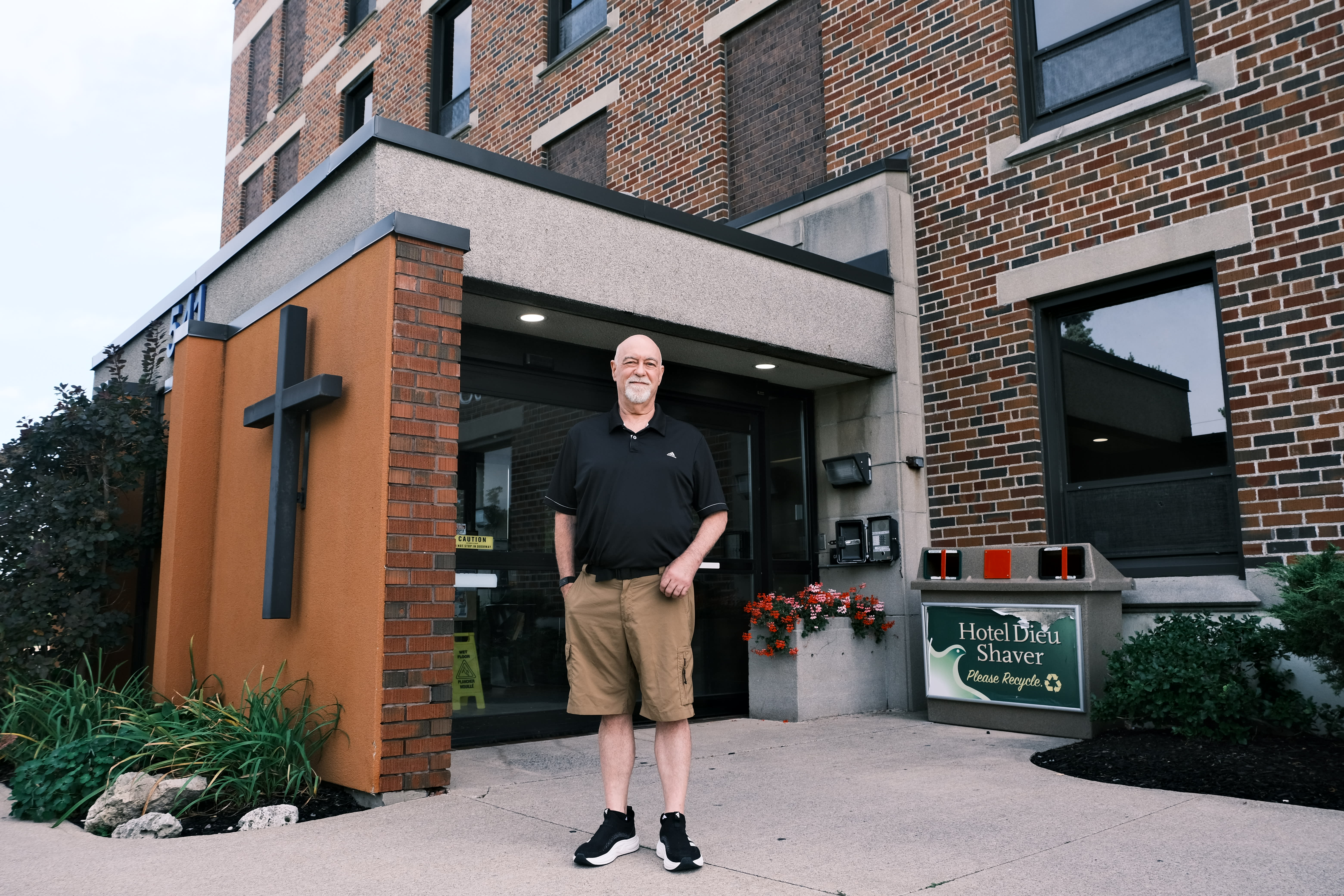
On Rehabilitation Day, one Hotel Dieu Shaver patient reflects on the stroke that nearly took his life, the rehabilitation team that helped him find his way back, and everything he still plans to accomplish.
For more than three decades, Ian Smith has made a career out of restoration. A fluvial geomorphologist, environmental consultant and educator, the 64-year-old has spent much of his professional life restoring streams and wetlands, creating wildlife habitat and finding ways to help damaged natural systems function again.
It is work that has taken Ian into classrooms at Niagara College and the University of Toronto, onto major environmental projects across Ontario and, quite literally, into streams and wetlands. Even after a long and accomplished career, he wasn't quite ready to slow down; instead, he embarked on another challenge, pursuing a PhD and returning to research he had first considered decades earlier.
Then, on June 24, his life changed in an instant.
“I woke up on the morning of June 24 — a date that will live in infamy,” Ian recalled. His left thumb and forefinger weren't cooperating, and when he reached for his glasses on the nightstand, they fell to the floor.
“I said to [my wife], ‘I think I might be having a stroke.’”
Ian was right. He had suffered a severe hemorrhagic stroke — a brain bleed that left his family facing the possibility that he might not survive the night.
He did, and after a week of stabilization followed by further care within Niagara's acute stroke system, the conversation gradually shifted from survival to what might come next. Ian remembers being told that, if he recovered enough and a bed became available, he could have the opportunity to continue his recovery at Hotel Dieu Shaver.
“I remember laying in bed thinking, I'll be a very fortunate man if I can recover enough … that I can get into the wait list for a rehab bed.”
A chance to get his life back
By the time Ian arrived at HDS, everyday tasks he had rarely given a second thought had become enormous challenges. His left side was paralyzed, he required support simply to sit upright, and standing, transferring and getting to the washroom all required assistance.
His speech had also been affected, but Ian remembers something else about the ride from Niagara Falls to HDS: hope.
“I beat the Grim Reaper,” he recalled thinking. “And I'm about to get a chance to recover some of my life back.”
Ian didn't know how much of that life he would regain. He only knew he had been given an opportunity, and that rehabilitation offered him a chance to work toward the independence he had suddenly lost.
“If I'm willing to put something into this, and they're as good as I've heard at Shaver, then I might have a kick at returning to some version of my life that is similar to what I've left behind and valued.”
Nearly two months later, sitting down to tell his story on his final full day as an HDS inpatient, Ian could reflect on just how far he had come.
“I'm sitting today on my last day with you, thinking, that came true.”
Finding progress in the little things
Working closely with members of his rehabilitation team, including Bethany Lamb, Rebecca Latam and Julianna Marfisi, Ian began rebuilding his strength, balance, mobility and independence. His rehabilitation incorporated everything from repetitive movement and balance work to electrical stimulation and interactive technology.
But when Ian looks back on those first days, it isn't a particular piece of equipment or exercise that comes immediately to mind. It's the people.
“The first thing that springs to mind … is the warmth of the people that were working with me,” he said. Rather than the stereotypical coach barking at him to push harder, Ian remembers therapists putting a hand on his shoulder, sometimes literally holding his hand, and calmly guiding him through the next challenge.
Rebecca's frequent encouragement became particularly memorable. Whenever Ian was moving in the right direction, he would hear an enthusiastic “Yes!” — so frequently, in fact, that he eventually accused her of sugarcoating his progress.
“She said, ‘No, no, no. You're going in the right direction, and I want to reinforce that with you,’” Ian recalled. “I can't tell you how much that means to me now that I'm sitting looking backwards at two months of essentially that positive reinforcement.”
As his mobility improved, the relationship with his therapists evolved too. Ian jokingly compared them to “praying mantises” hovering nearby as he learned to walk, ready to steady him if necessary. Eventually, he started telling them to stop hovering — only to catch their shadows nearby in the therapy gym and realize they were still keeping a watchful eye.
The milestones kept coming. One of the biggest was also one of the most ordinary: being able to get out of bed in the middle of the night and use the washroom independently.
“I was giddy in the morning,” Ian said. “I woke up and thought, I'm getting better. And I'm going to be able to go home and not be a burden on my family.”
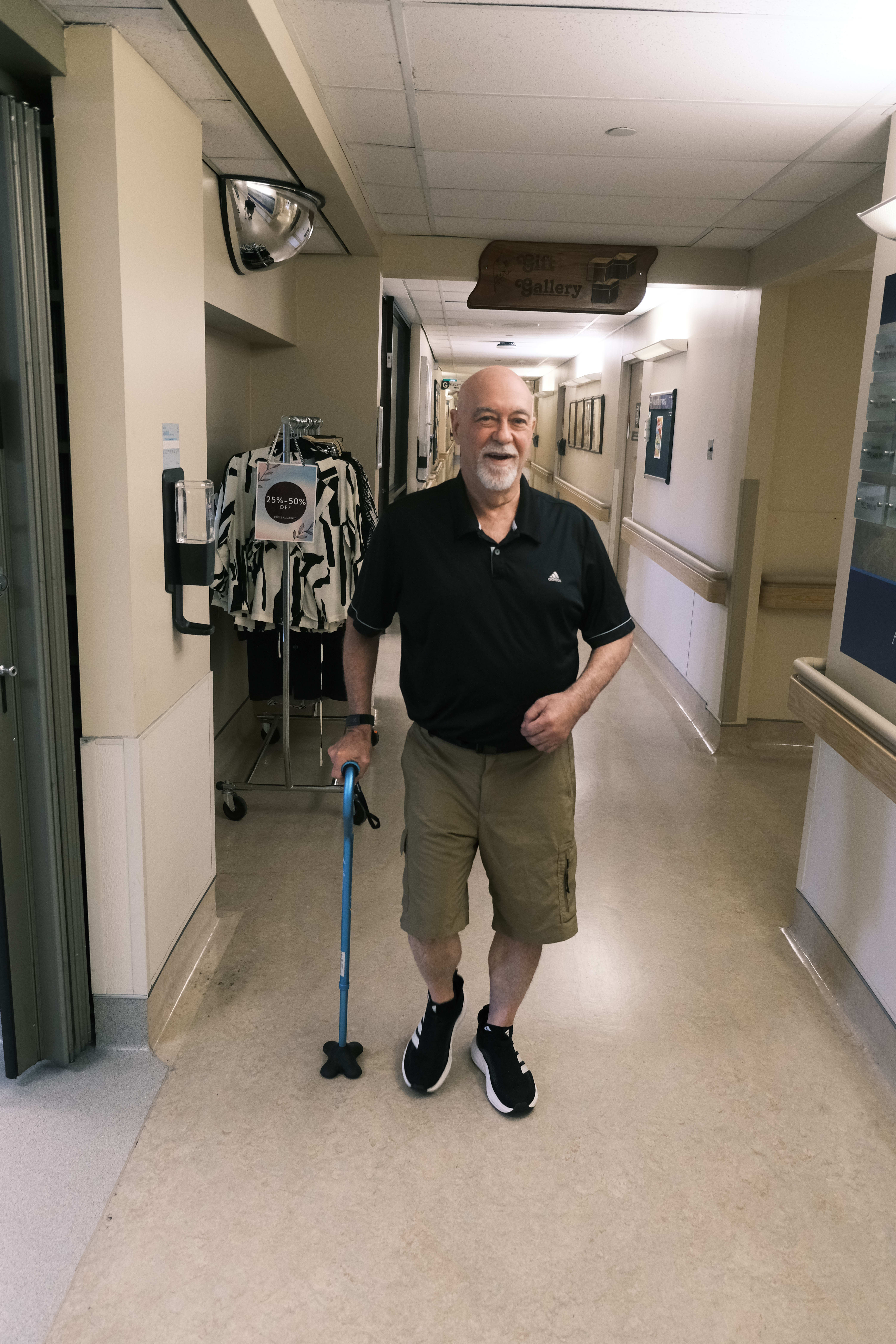
Then came his first steps with a cane. A few days later, Ian asked Bethany to record him walking on his phone so he could share the milestone with friends, family and former students.
His message was simple: “I've got this.”
The response helped convince Ian that perhaps he really did.
“I'm going to — literally, no pun intended — walk out of here,” he recalled thinking. “Life isn't over.”
For Ian, it was a watershed moment. Today, he can walk hundreds of metres and has progressed to walking without a cane during portions of his therapy.
“I'm different and able, but I'm not disabled,” he said. “I'm going to be okay.”
A different understanding of rehabilitation
Before his stroke, Ian knew Hotel Dieu Shaver existed. He had worked just a few hundred metres away, ridden his bicycle past the hospital and knew, broadly, that rehabilitation happened within its walls.
“It was a passing thought,” he admitted.
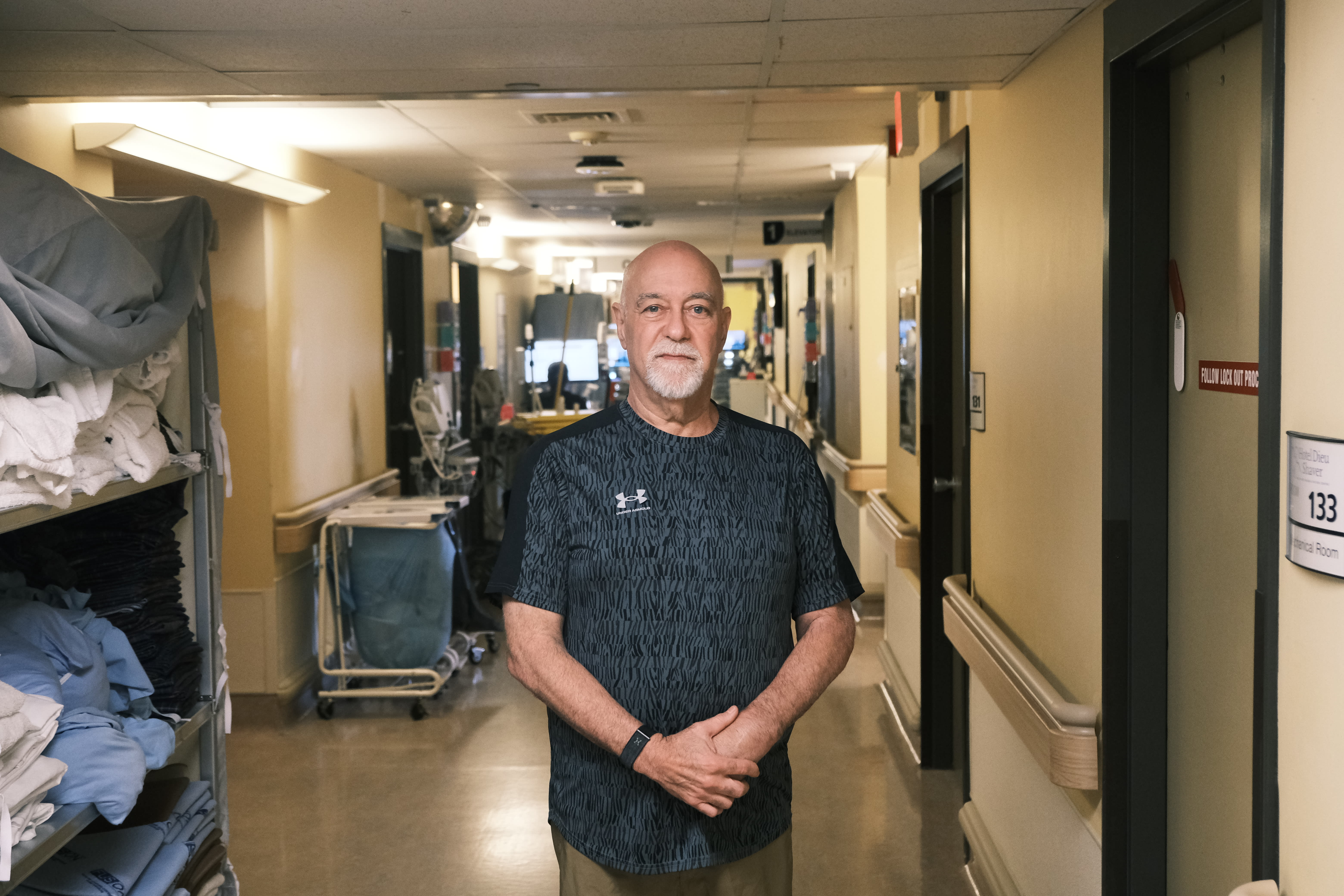
His appreciation for rehabilitation is considerably different today, shaped not only by his own recovery but by the journeys of the patients around him. Ian initially hoped for a private room, but now says sharing a room and completing therapy alongside other patients gave him a perspective he wouldn't trade.
“The challenges that they have faced dwarf my own,” he said. “Instead of wallowing in my own self-pity, I look at their successes.”
That perspective became another source of motivation. Ian watched patients older than him work toward their own goals and found himself drawing inspiration from their determination, while the friendships formed along the way became an unexpected part of his rehabilitation experience.
“I've made friends here that I think will be lifelong friends.”
Ian also thinks about his great-grandfather, who experienced a stroke with similar paralysis decades ago and lived with significant impairment for the remainder of his life. The contrast between that experience and his own has left a lasting impression on someone who has spent much of his career immersed in science.
“You have the right tools, you have the right people, and the outcomes are far better,” he said. “It really is remarkable.”
Back to the life he loves
Discharge doesn't mean Ian's rehabilitation is finished. He intends to continue working on his recovery, including returning to HDS for outpatient rehabilitation, but there are some things waiting at home that no therapy gym can replicate.
At the top of that list is Lydia, his wife and, as Ian describes her, his best friend. She visited him every day throughout his inpatient stay and helped keep him moving forward during some of his most difficult moments.
“I've really missed my best friend,” Ian said. “She comes and visits every day, but it's not the same as sitting down to dinner or sitting in the pool, just talking about nothing.”
He's also eager to return to his backyard in Fonthill — his “little slice of heaven,” where he and Lydia have planted native trees and plants and worked to create habitat for local wildlife.
And then there is the PhD.
Two nights before his stroke, Ian was putting the finishing touches on his research proposal. The University of Toronto granted him two semesters of medical leave; Ian plans to take only the summer semester and return to his studies almost immediately.
His next academic milestone is successfully completing the proposal evaluation that would move him from PhD student to PhD candidate. Beyond that lies another milestone Ian now sees somewhat differently than he did before June 24.
Before his stroke, he wasn't even certain he would attend his eventual graduation ceremony. Now, after spending two months rebuilding his ability to stand and walk, crossing that stage has taken on new meaning.
“I said to my wife, ‘Wouldn't it be cool to kind of hobble or stumble across the stage at Convocation Hall and receive the PhD diploma?’” Ian said.
“I'm going to walk across the stage, just to prove a point, maybe. To myself.”
For a man who has devoted much of his life to restoring the natural world, the past several months have brought an entirely different understanding of what restoration can mean. Recovery isn't necessarily about returning something to precisely what it was before; sometimes, it is about adapting, rebuilding and discovering what is still possible.
For Ian, there are plenty of possibilities ahead.